
Introduction
The idea sounds almost too optimistic to work in real life.
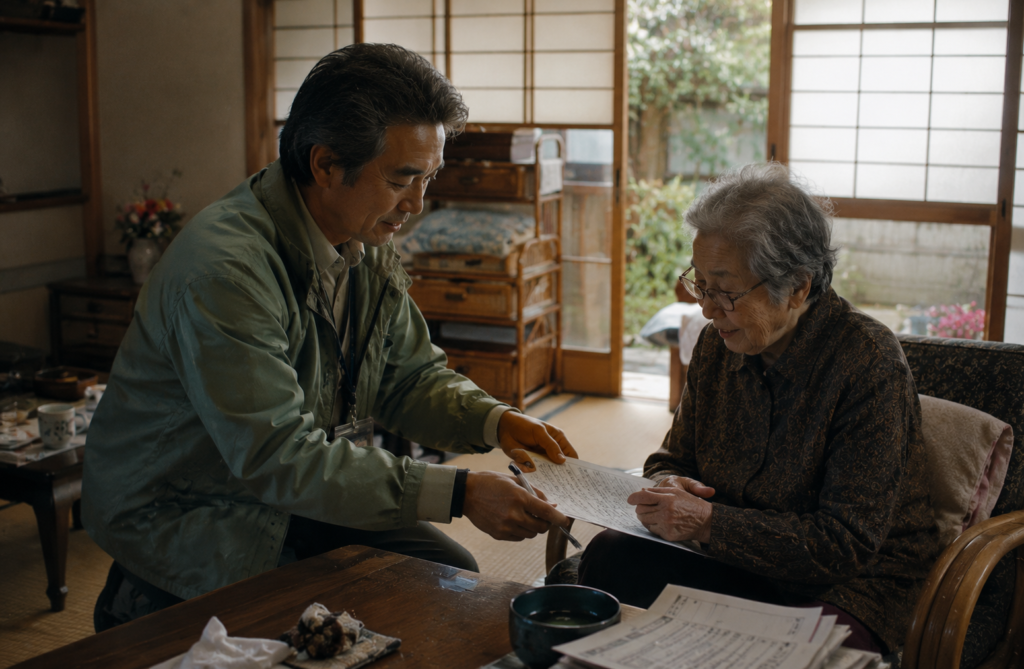
Imagine helping an elderly person with daily tasks for a few hours and, instead of receiving money, earning credits measured in time. Those credits could later be used when you became old yourself, or transferred to relatives who needed care.
At first glance, it sounds like the kind of utopian concept people discuss in academic conferences and then quietly abandon once reality gets complicated.
But Japan actually tried it.
The system is called Fureai Kippu, often translated as “Caring Relationship Tickets,” and it emerged during the 1990s as Japan faced one of the biggest demographic challenges in the modern world: a rapidly aging population.
The deeper you look into it, the more fascinating the system becomes. It was not simply an economic experiment. It was an attempt to answer a difficult question modern societies still struggle with today.
What happens when elderly care becomes too large for families alone, too expensive for governments alone, and too emotionally important to leave entirely to markets?
Japan’s answer was strange, creative, and deeply revealing about how humans assign value to care, time, and social responsibility.
Why Japan Needed Something Different
By the late twentieth century, Japan was already becoming one of the oldest societies on Earth.
Falling birth rates combined with rising life expectancy created demographic pressures unlike anything the country had experienced before. The traditional expectation that families would care for elderly relatives began colliding with modern urban life, smaller households, and changing work patterns.
For generations, Japanese society relied heavily on family structures to support aging parents and grandparents. Multi-generational households were common, and elderly care often remained a private family responsibility.
But economic modernization changed that structure.
Younger workers increasingly moved into cities for employment. Families became smaller. Women entered the workforce in larger numbers, reducing the amount of unpaid caregiving labor available inside households.
At the same time, the elderly population continued growing rapidly.
The numbers became difficult to ignore.
By the 1990s, policymakers and communities across Japan recognized that relying entirely on families would no longer be sustainable long term. Government welfare systems could help, but expanding state-funded elderly care indefinitely also created enormous financial pressure.
That tension still exists in many countries today.
Most societies seem to agree elderly care should involve some mixture of family responsibility, public support, and community involvement. The difficult part is deciding how much responsibility each side should carry.
Japan’s aging crisis forced those questions into the open earlier than many other nations.
What Is the Fureai Kippu System?
The Fureai Kippu system began developing in Japan during the 1990s through volunteer and nonprofit care networks.
The concept was surprisingly simple.
People earned time credits by helping elderly individuals with tasks such as:
- Cleaning homes
- Preparing meals
- Shopping for groceries
- Providing companionship
- Assisting with transportation
- Helping with basic daily activities
Instead of receiving ordinary money, volunteers accumulated credits based on the number of hours worked.
Those credits could later be redeemed for care services for themselves or transferred to aging relatives living elsewhere in Japan.
The system essentially treated caregiving time as a form of currency.
One hour of care generated one hour of future care.
That idea challenged many assumptions modern economies make about value.
Financial systems usually prioritize measurable market productivity. Caregiving, emotional labor, companionship, and community support often receive less economic recognition even though societies depend heavily on them.
Fureai Kippu attempted to build an alternative framework where human care itself became the unit of exchange.
How the System Actually Worked
Different local organizations operated their own versions of the Fureai Kippu model across Japan. While details varied between programs, most systems followed a similar structure.
Volunteers registered through nonprofit organizations or community care associations. After completing approved caregiving tasks, they earned credits recorded inside a central account system.
These credits could later be used in several ways.
Some participants saved credits for their own future elderly care. Others transferred them to parents or relatives living in different cities. In some cases, credits could even be partially exchanged or supplemented alongside traditional financial payments.
The system worked partly because many participants valued the quality of care itself.
Some families reportedly preferred receiving assistance from motivated community volunteers rather than purely commercial care providers. The relationship aspect mattered.
| Characteristic | Fureai Kippu System |
|---|---|
| Country | Japan |
| Developed | Primarily during the 1990s |
| Main Purpose | Community-based elderly care |
| Unit of Exchange | Time credits |
| Typical Tasks | Cleaning, meals, companionship, transportation |
| Managed By | Nonprofits and volunteer networks |
| Transferable? | Often yes |
| Main Social Goal | Support aging population through community exchange |
The system did not completely replace ordinary money or government programs.
Instead, it functioned alongside them as an additional social support structure.
That distinction matters because the project was never really trying to abolish traditional economics. It was trying to solve gaps left behind by conventional systems.
Why the Idea Fascinated Economists and Sociologists
The Fureai Kippu system attracted global attention because it challenged standard economic assumptions about labor and value.
Modern economies generally reward work through financial compensation. But caregiving creates a strange problem.
Much of the labor holding societies together happens outside traditional markets.
Parents raising children, neighbors helping one another, relatives caring for elderly family members, and volunteers supporting communities often perform economically essential work without generating conventional wages.
Fureai Kippu tried to recognize that hidden labor formally.
The system also raised deeper philosophical questions.
Should all forms of care become financial transactions?
Would paying entirely through money weaken social relationships?
Could communities create alternative systems balancing economics with human connection?
These questions became especially important in Japan because demographic pressure continued intensifying every decade.
By the early twenty-first century, Japan had one of the oldest populations in the world. Life expectancy remained extremely high while birth rates stayed extremely low.
That created a serious structural concern.
Systems based on reciprocal care work best when younger populations remain large enough to support older generations. Once elderly populations grow too quickly relative to younger workers, the balance becomes harder to maintain.
That is one reason many observers viewed Fureai Kippu as both inspiring and fragile at the same time.
The Demographic Problem Behind the System
One of the most interesting aspects of Fureai Kippu is that the system quietly exposed a demographic reality many modern countries still avoid discussing openly.
Aging populations change everything.
Healthcare systems become more expensive. Pension systems face increasing pressure. Labor shortages grow. Elderly care demands expand rapidly while the number of younger caregivers shrinks.
Japan became an early example of this transformation.
Several demographic trends drove the problem:
- Declining birth rates
- Longer life expectancy
- Smaller family sizes
- Urban migration reducing family caregiving networks
- Rising healthcare costs
- Fewer younger workers supporting more retirees
This is where skepticism about long-term sustainability starts making sense.
A system based heavily on reciprocal care works more easily when societies still have relatively balanced age structures. Once elderly populations grow too large compared to younger generations, the math becomes harder.
In some ways, the Fureai Kippu system resembled pension systems themselves.
Both depend partly on future generations maintaining enough productive capacity and social participation to support growing numbers of older citizens.
That does not make the system meaningless.
If anything, it reveals how deeply demographic structure shapes economic possibilities.
Fureai Kippu vs. Traditional Money Systems
The Fureai Kippu model stood out because it treated time and care differently from ordinary market economies.
Traditional currencies generally reward scarcity, productivity, and financial demand. Fureai Kippu focused instead on reciprocal social contribution.
| Traditional Money | Fureai Kippu |
|---|---|
| Based on financial value | Based on time and care |
| Accumulates through wages and investment | Accumulates through caregiving hours |
| Market-driven | Community-driven |
| Usually impersonal | Relationship-oriented |
| Focused on purchasing power | Focused on social support |
| National financial system | Local and nonprofit networks |
The comparison reveals something important.
Modern economies are extremely good at pricing products, services, and industrial output. They are often much less effective at valuing emotional labor, caregiving, companionship, and community trust.
That tension appears constantly in debates about healthcare, childcare, elder care, and unpaid domestic labor.
Fureai Kippu attempted to build a bridge between economic systems and social responsibility.
Whether it could scale indefinitely was another question entirely.
Did the System Actually Work?
The answer depends on how “success” is defined.
Fureai Kippu never replaced Japan’s mainstream economy, nor did it solve the country’s demographic crisis permanently. But the system did create functioning local care networks and inspired broader discussions about alternative economic models.
Some participants reported stronger community relationships and higher-quality care experiences compared to purely commercial systems. The exchange structure also encouraged volunteering by giving participants a sense that their contributions would eventually return to them in the future.
At the same time, scaling the system nationally created obvious challenges.
Administrative coordination became complicated. Care quality varied between organizations. Younger generations already facing economic pressure sometimes had limited time available for volunteer caregiving.
The biggest long-term issue remained demographics.
As elderly populations grow larger while younger populations shrink, systems based heavily on reciprocal labor become increasingly difficult to sustain mathematically.
That challenge extends far beyond Japan.
Many developed countries now face similar demographic trends involving aging populations, declining birth rates, and rising healthcare costs.
Japan simply encountered the problem earlier and more visibly than most.
What Fureai Kippu Reveals About Human Value
The reason the Fureai Kippu story remains fascinating is because it exposes how narrow many economic systems can become.
Modern societies often behave as though only financially measurable activity creates real value. But elderly care reveals the limitations of that mindset very quickly.
Caregiving involves patience, trust, emotional presence, and human attention. Those things are difficult to quantify cleanly through ordinary market pricing.
The Japanese experiment attempted to acknowledge that reality directly.
At the same time, the system also revealed the limits of idealism.
Communities can absolutely support one another in powerful ways. But large demographic imbalances eventually create pressures that no amount of goodwill alone can fully solve.
That tension probably explains why the Fureai Kippu model continues attracting attention decades later.
It represents both hope and warning simultaneously.
Hope that societies can invent creative ways to value human care beyond simple cash transactions.
And warning that aging populations may force countries to rethink economic systems much more radically in the future.
Conclusion
Japan’s Fureai Kippu system started with a deceptively simple idea: treat caregiving time as something valuable enough to function like currency.
The experiment emerged from necessity as Japan confronted the realities of an aging society, shrinking family networks, and growing pressure on traditional welfare systems. Instead of relying entirely on markets or government institutions, the system attempted to build a third layer based on reciprocal community support.
For a while, it worked well enough to attract worldwide attention.
But the deeper lesson of Fureai Kippu is not simply about alternative currencies or volunteer networks.
It is about demographics.
Every economic system ultimately depends on human relationships, labor distribution, and population structure. When societies age rapidly, even wealthy countries begin struggling to balance care, productivity, and financial sustainability.
Japan reached that crossroads earlier than most nations.
The rest of the world is slowly heading toward the same questions.
Japan’s Fureai Kippu system used time credits instead of cash for elderly care, revealing both the creativity and limits of community economies.