
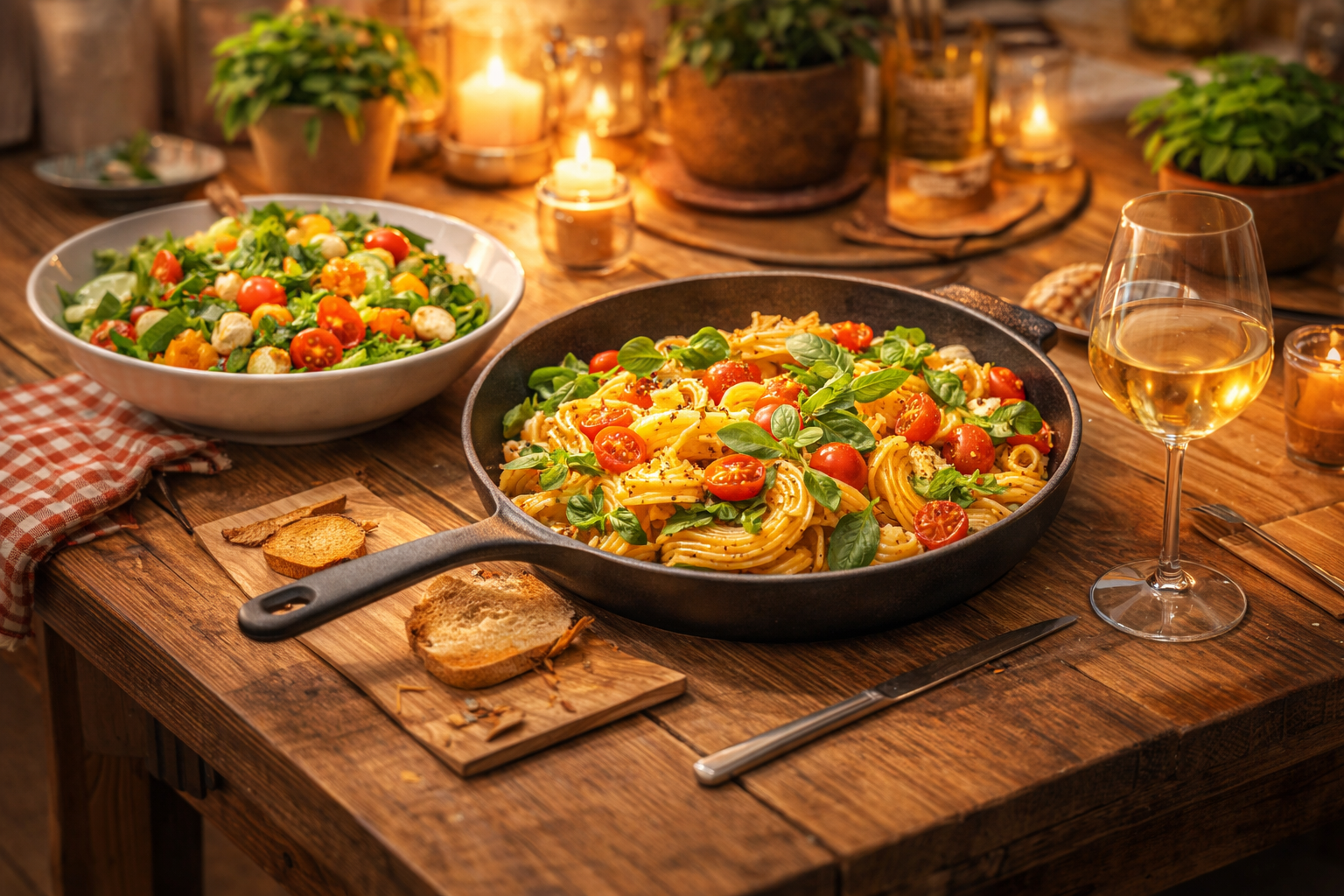
There’s a common belief that great food requires complex recipes, advanced techniques, or special skills. But if you think about the meals people remember most, they’re often surprisingly simple.
A warm plate of pasta after a long day. A homemade breakfast on a quiet morning. A dish that doesn’t look extraordinary but somehow feels exactly right.
Simple home cooking has a way of delivering that experience more consistently than people expect. And it’s not by accident.
Why Simple Food Feels More Satisfying
One reason simple meals stand out is that they don’t try to do too much.
When a dish is overloaded with ingredients or steps, it can lose clarity. Flavors compete instead of complementing each other. The experience becomes more about the process than the result.
Simple meals, on the other hand, tend to focus on balance. A few ingredients, prepared well, often create something more enjoyable than a complicated dish done without attention.
This doesn’t require expertise. It just requires intention.
Fresh Ingredients Change Everything
One of the biggest advantages of cooking at home is control over ingredients.
Even without thinking too much about it, people tend to handle ingredients differently when cooking for themselves. Vegetables are fresher, meals are prepared closer to the time they’re eaten, and there’s less processing involved.
That freshness shows up in subtle ways—texture, aroma, and overall flavor.
You don’t need anything special. Just paying attention to how ingredients look and feel before cooking already makes a difference.
Cooking Slows Things Down (In a Good Way)
Daily life moves fast. Cooking creates a small pause in that pace.
Even a simple meal requires a bit of attention—cutting, stirring, waiting. That process naturally slows things down and shifts focus away from distractions.
For many people, this becomes one of the most underrated benefits of cooking.
It’s not just about the food. It’s about the moment.
You Can Adjust as You Go
When you cook at home, nothing is fixed.
You can taste as you go. Adjust flavors. Change the balance of a dish depending on what feels right.
This flexibility is something that pre-made meals or strict recipes don’t offer.
Over time, people naturally develop a sense of what works for them. Meals become less about following instructions and more about understanding simple patterns.
That’s when cooking starts to feel easier.
Simplicity Highlights What Matters
Simple cooking doesn’t hide mistakes—but it also doesn’t hide quality.
When a dish has only a few elements, each one matters more. The texture of something, the level of seasoning, the timing—all become more noticeable.
At first, that might seem intimidating. But it’s actually what makes improvement easier.
You don’t need to manage ten variables. Just a few.
The Emotional Side of Home Cooking
There’s also something personal about cooking your own food.
Meals become tied to routines, moods, and moments in your day. Over time, certain dishes start to feel familiar in a way that goes beyond taste.
This is why even very simple meals can feel comforting.
It’s not just about what you’re eating—it’s about the context around it.
Why Complexity Isn’t Always Better
It’s easy to assume that more effort equals better results. But in cooking, that’s not always true.
Complex dishes can be great, but they also introduce more chances for things to go wrong. More steps, more timing, more coordination.
Simple meals reduce that friction.
They’re easier to repeat, easier to adjust, and easier to enjoy consistently.
Building Confidence Through Simplicity
One of the biggest barriers to cooking is confidence.
People often feel like they need to follow recipes perfectly or know exactly what they’re doing. That pressure can make the process feel stressful instead of enjoyable.
Simple cooking removes that pressure.
When you focus on basic meals, you naturally build confidence. You start recognizing patterns—how things cook, how flavors change, what works.
Over time, cooking becomes less about effort and more about familiarity.
Making Simple Meals Feel Complete
A simple meal doesn’t have to feel incomplete.
The key is balance. Something warm, something fresh, something with texture. It doesn’t need to be complicated—it just needs to feel intentional.
Even small details can change how a meal feels. Serving food thoughtfully, sitting down without distractions, or taking a moment before eating can make the experience more satisfying.
Why People Keep Coming Back to Simple Food
At the end of the day, the meals people return to most often are rarely the most elaborate ones.
They’re the ones that are reliable. The ones that fit into daily life. The ones that feel good without requiring too much effort.
That’s where simple home cooking stands out.
It’s not about impressing anyone. It’s about creating something that works, again and again.
Final Thoughts
Simple home cooking isn’t limited—it’s focused.
By working with fewer ingredients and straightforward methods, you create space for better flavor, less stress, and more consistency.
You don’t need complex recipes to enjoy good food. In many cases, the simplest meals are the ones that stay with you the longest.