
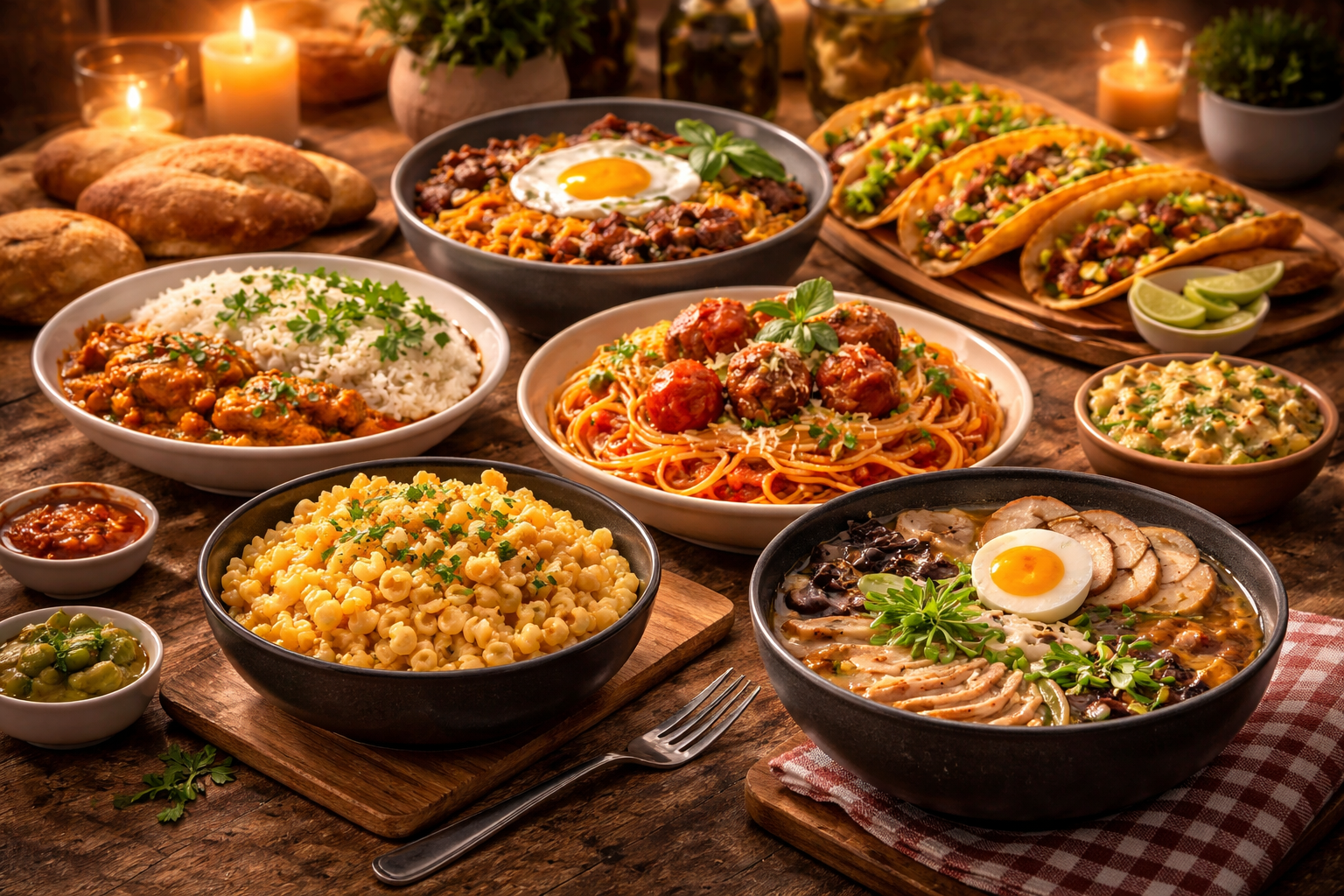
No matter where you go in the world, one thing quickly becomes clear: every culture has its own version of comfort food.
These are not necessarily the most elaborate or visually impressive dishes. In many cases, they are simple, familiar meals that people return to again and again. What makes them special is not complexity, but connection.
Comfort food sits at the intersection of memory, culture, and daily life. It reflects how people grow up, how families interact, and how traditions are passed down over time.
What Makes a Food “Comforting”
Comfort food is less about ingredients and more about experience.
A dish becomes comforting not because of how it’s prepared, but because of what it represents. It might remind someone of childhood, of a specific person, or of a moment when life felt simpler.
These associations are often built over years. The same meal, repeated in similar contexts, gradually becomes tied to a feeling of familiarity and security.
That’s why comfort foods can vary so much from one person to another, even within the same culture.
The Role of Family Traditions
In many households, certain meals appear regularly—on weekends, during holidays, or at the end of a long day.
These meals become part of a family’s rhythm. Over time, they carry meaning beyond the food itself.
A dish prepared by a parent or grandparent often becomes a reference point. Even when people grow older and live in different places, they tend to return to those same meals.
It’s not just about taste. It’s about continuity.
How Geography Shapes Comfort Food
The ingredients used in comfort food are often tied to what is locally available.
In colder regions, meals tend to be warm, filling, and rich in calories. In warmer climates, dishes may be lighter, fresher, and quicker to prepare.
Over generations, these patterns become traditions. What starts as a practical way of cooking evolves into cultural identity.
This is why comfort foods from different parts of the world can look completely different, yet serve the same purpose.
Simplicity Is a Common Pattern
Interestingly, comfort foods are rarely complicated.
They are usually built around simple techniques and accessible ingredients. This makes them easy to prepare regularly, which reinforces their place in daily life.
Because they are repeated often, they become familiar. And familiarity is a big part of what makes something comforting.
Memory and Sensory Experience
Food has a unique ability to trigger memory.
Smell, in particular, is strongly connected to the brain’s memory centers. A familiar aroma can instantly bring back a specific moment, even years later.
This is one reason comfort foods feel so powerful. They don’t just remind people of the past—they recreate it, even if only for a moment.
Comfort Food and Emotional Stability
Beyond nostalgia, comfort food can also play a role in emotional regulation.
During stressful or uncertain times, people often gravitate toward familiar meals. These foods provide a sense of predictability and control.
In a world that changes constantly, having something consistent—even something as simple as a familiar dish—can feel grounding.
Cultural Identity Through Food
Comfort foods are also a way of preserving cultural identity.
As people move, travel, or live abroad, food becomes a way to stay connected to their roots. Preparing traditional dishes allows individuals to maintain a sense of belonging, even far from home.
This is especially noticeable in immigrant communities, where recipes are passed down carefully across generations.
Why Comfort Foods Endure
Trends in food come and go. New recipes appear, diets change, and preferences evolve.
But comfort foods tend to remain.
They are not driven by trends or novelty. They are driven by habit, memory, and emotional connection. That makes them more stable than most other types of food.
Even when people experiment with new dishes, they often return to the same familiar meals.
The Personal Side of Comfort Food
While culture plays a big role, comfort food is also deeply personal.
Two people from the same place might have completely different comfort foods, depending on their experiences growing up.
This individuality is part of what makes the concept so interesting. Comfort food is shared, but also unique.
Final Thoughts
Comfort food exists in every culture because it fulfills a universal need.
It connects people to their past, provides emotional stability, and reflects the environment they come from.
Despite the differences in ingredients and preparation, the purpose remains the same: to create a sense of familiarity, warmth, and belonging.
And in a world that is constantly changing, that kind of consistency matters more than it might seem.