
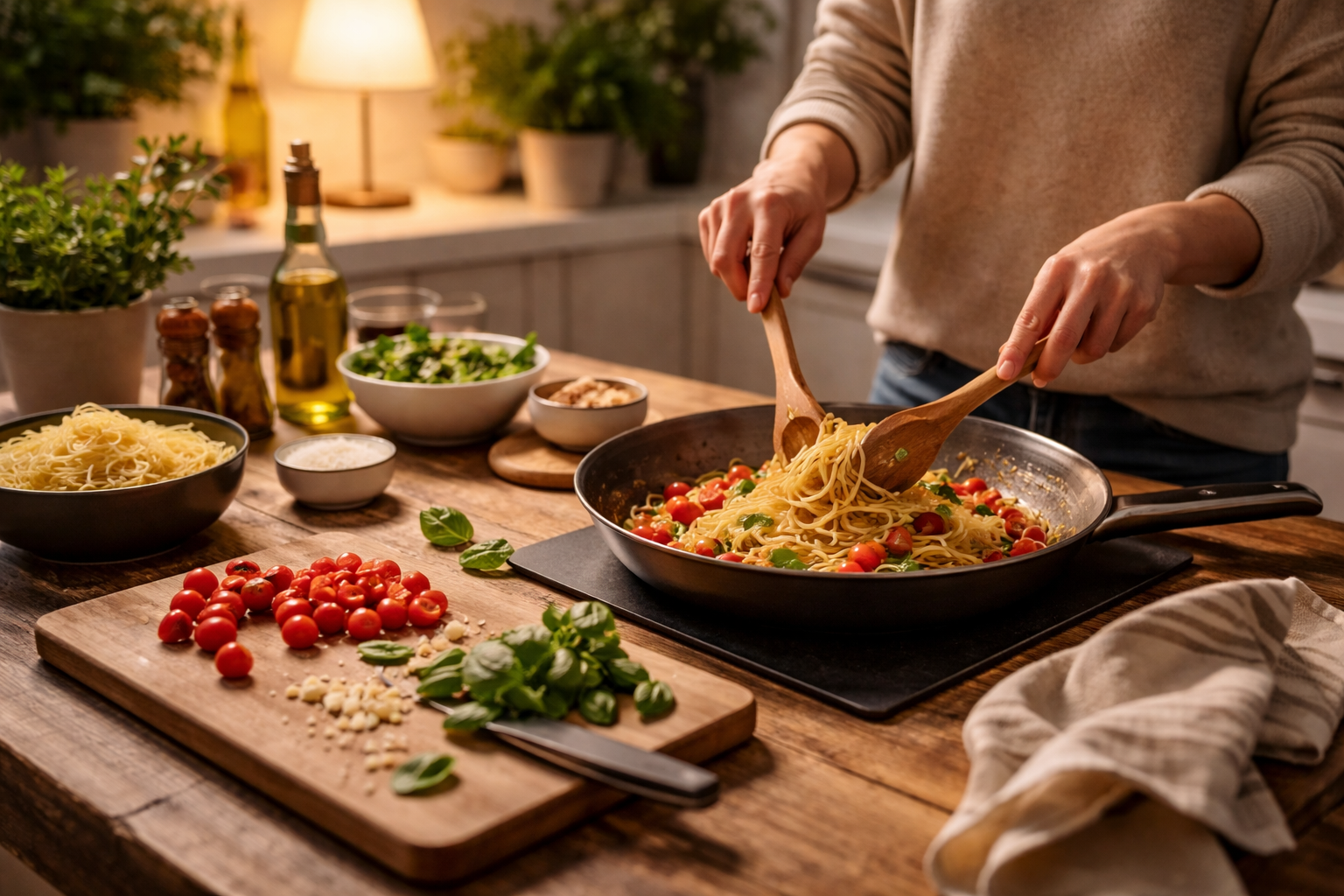
Eating out is convenient, fast, and often seen as a treat. But over time, many people notice something interesting: meals prepared at home tend to feel more satisfying, even when they are simpler. It’s not just about taste or cost. There’s something in the process of cooking that changes how the experience is perceived, making it feel more complete and personal.
This doesn’t mean home cooking is always better in a technical sense. Restaurants can offer variety, precision, and creativity. But satisfaction doesn’t always come from complexity. In many cases, it comes from involvement. When you prepare your own food, even in a simple way, the meal becomes more than just something you consume—it becomes something you participated in.
The Difference Between Convenience and Engagement
One of the main differences between eating out and cooking at home is the level of engagement. When you eat out, everything is done for you. The food arrives ready, with no effort required. While that is convenient, it also removes you from the process entirely. You experience only the final result, not the steps that led to it.
At home, even a simple meal involves small actions—preparing ingredients, adjusting heat, checking textures. These actions create a sense of involvement that changes how the meal feels. You are not just eating; you are completing a process. That subtle difference makes the experience more engaging and, often, more rewarding.
Effort Changes Perception
There is a psychological effect where effort increases perceived value. When you invest time and attention into something, you naturally appreciate it more. This applies to many areas of life, and food is no exception.
A meal that took even a small amount of effort to prepare tends to feel more meaningful than one that required none. It doesn’t have to be complicated. Even basic preparation creates a sense of ownership over the result. That ownership makes the meal feel more satisfying, regardless of how simple it is.
Control Over the Experience
Cooking at home also gives you full control over the experience. You decide how the food is prepared, how it tastes, and how it is served. This flexibility allows you to adjust things in real time, which creates a more personal connection to the meal.
When you eat out, the experience is fixed. At home, it evolves as you go. You can make small adjustments, try different approaches, or simply adapt based on what feels right in the moment. This control contributes to a feeling of autonomy, which is closely linked to satisfaction.
Slowing Down the Moment
Home cooking naturally slows things down. Instead of jumping straight to eating, there is a transition period where you prepare the meal. This creates a break between activities and gives you time to shift your focus.
That transition often makes the meal feel more intentional. Instead of eating quickly between tasks, you arrive at the moment with more awareness. This changes how the food is experienced, even if the meal itself is simple.
Familiarity and Comfort
Meals prepared at home often become part of a routine. Over time, certain dishes are repeated, slightly adjusted, and gradually refined. This creates familiarity, which contributes to comfort.
That familiarity is not boring—it’s stabilizing. Knowing what to expect, and being able to recreate it easily, makes the experience reliable. In a world where many things are unpredictable, that reliability has value.
Simplicity Works in Your Favor
One of the biggest misconceptions about cooking is that it needs to be complex to be enjoyable. In reality, simplicity often leads to better results. Fewer elements make it easier to focus on what matters, and reduce the chances of things going wrong.
Simple meals are also easier to repeat. This consistency builds confidence over time, which makes cooking feel less like a task and more like a natural part of daily life. The easier something is to repeat, the more likely it is to become a habit.
The Environment Matters Too
Where and how you eat influences how the meal feels. At home, you control the environment. You can sit comfortably, take your time, and eat without distractions. This creates a more relaxed atmosphere.
In contrast, eating out often comes with time pressure, noise, or a sense of movement. Even when the food is good, the environment can limit how much you actually enjoy the moment.
Building a Sustainable Routine
Home cooking is not just about individual meals—it’s about building a sustainable routine. When cooking becomes part of your daily rhythm, it reduces reliance on external options and creates a sense of structure.
This doesn’t mean cooking every meal from scratch. It simply means having a base level of comfort with preparing your own food. That comfort makes daily decisions easier and reduces friction over time.
Why People Return to Home Cooking
Even people who enjoy eating out often return to home cooking regularly. Not because they have to, but because it offers something different. It provides a sense of control, familiarity, and involvement that is difficult to replicate elsewhere.
Over time, this becomes less about preference and more about balance. Eating out becomes occasional, while cooking becomes the default—not out of obligation, but because it feels better in the long run.
Final Thoughts
Cooking at home doesn’t need to be complicated to be rewarding. In fact, its value often comes from its simplicity. The act of preparing your own food creates a level of engagement that changes how the meal is experienced.
While eating out has its place, home cooking offers something deeper. It slows things down, creates connection, and turns everyday meals into something more intentional.