
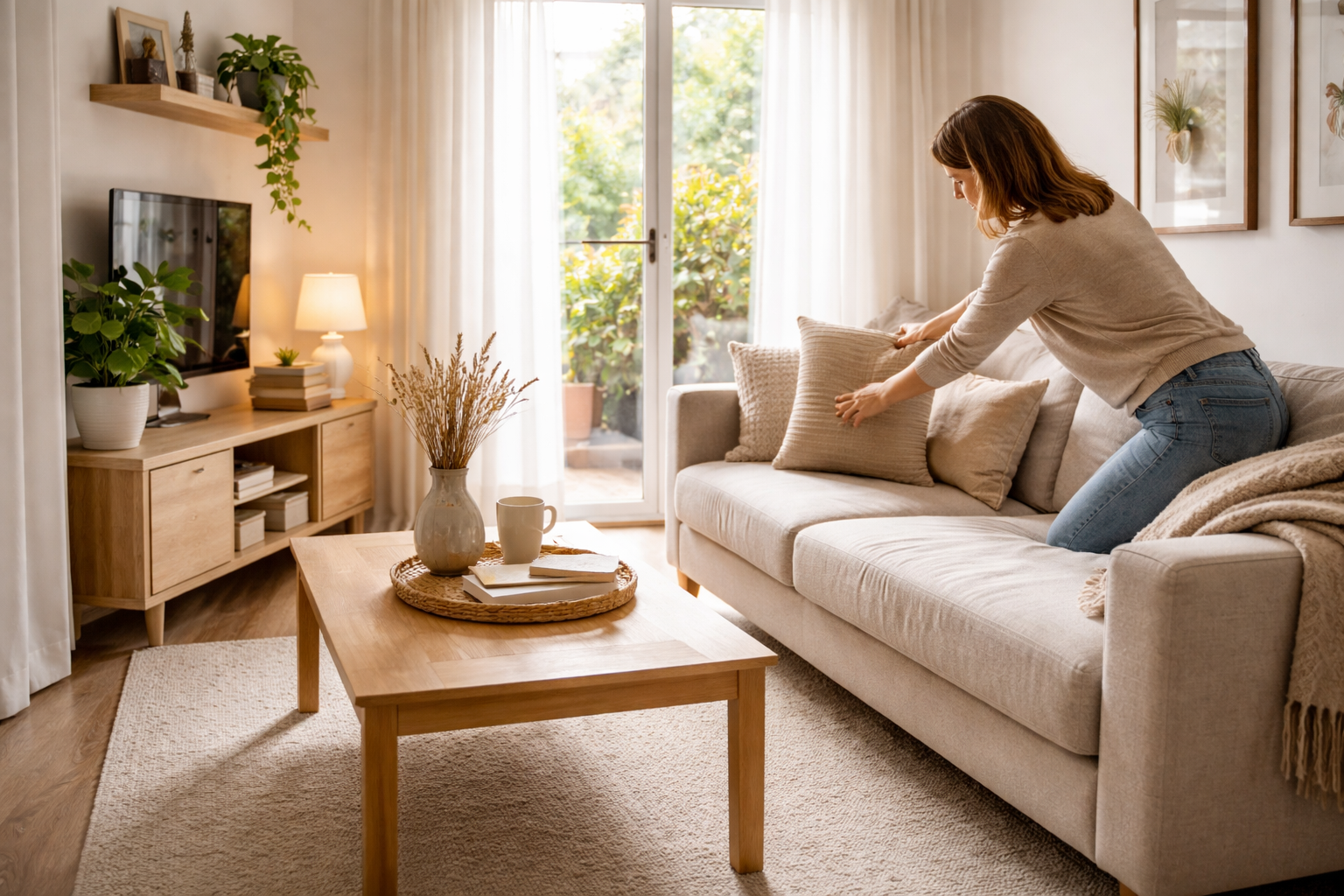
Living in a small space can feel limiting at first, especially when the layout doesn’t seem to work in your favor. Rooms may feel crowded, storage seems insufficient, and even simple daily activities can feel slightly constrained. But interestingly, the perception of space is not only determined by square footage. The way a room is organized, lit, and visually structured can dramatically change how large or small it feels in practice.
Many homes that feel open and comfortable are not necessarily large—they are simply well thought out. Instead of focusing on adding more, the goal is often to remove friction and create visual clarity. With a few intentional adjustments, it’s possible to make even compact spaces feel noticeably more spacious and easier to live in without making any structural changes.
Why Small Spaces Often Feel Smaller Than They Are
A space usually feels small not because of its actual size, but because of how it is used. When furniture is oversized, layouts are inefficient, or too many elements compete for attention, the room starts to feel visually crowded. This creates a sense of compression, even if there is technically enough space to move around comfortably.
Another factor is visual interruption. When the eye encounters too many different shapes, colors, or objects, it has no clear place to rest. This makes the environment feel busy and tight. Creating a sense of openness is often less about adding space and more about simplifying what is already there.
Let Natural Light Define the Room
Light is one of the most powerful tools for changing how a space feels. Natural light, in particular, creates depth and makes surfaces appear more open and expansive. When light flows freely through a room, it softens edges and reduces the sense of confinement.
Maximizing natural light can be as simple as keeping windows unobstructed or choosing lighter window coverings. When sunlight spreads evenly across walls and floors, the room immediately feels more breathable. Even in spaces with limited natural light, replicating that softness with well-placed lighting can create a similar effect.
Use Fewer, Better-Placed Pieces of Furniture
One of the most common mistakes in small spaces is trying to include too much furniture. While each piece may seem necessary on its own, together they can overwhelm the room. The result is a layout that feels tight and difficult to navigate.
A more effective approach is to reduce the number of items and focus on placement. Leaving space between pieces allows the room to “breathe” visually. It also makes movement easier, which contributes to a more comfortable experience overall. Often, removing just one unnecessary item can make a noticeable difference.
Keep Visual Lines Clean and Continuous
The eye naturally follows lines—edges of furniture, walls, and pathways. When these lines are interrupted frequently, the space feels fragmented. But when they are clean and continuous, the room appears more open.
This is why simple layouts often work better in smaller spaces. Aligning furniture in a way that maintains clear pathways helps create a sense of flow. When the eye can move smoothly across the room, it perceives the space as larger than it actually is.
Limit Visual Clutter
Clutter doesn’t just take up physical space—it takes up visual space as well. Even small objects, when accumulated, can create a sense of noise that makes a room feel more confined.
Reducing visible clutter creates immediate relief. Surfaces that are mostly clear allow the room to feel lighter and more intentional. This doesn’t mean removing personality from the space, but rather being selective about what is visible at any given time.
Use Color to Create Depth
Color has a subtle but important impact on spatial perception. Lighter tones tend to reflect light, which helps walls feel farther apart. Darker tones absorb light, which can make surfaces feel closer.
Using a consistent color palette also reduces visual breaks. When colors flow naturally from one area to another, the room feels more cohesive. This continuity helps create the impression of a larger, more unified space.
Think Vertically, Not Just Horizontally
When floor space is limited, vertical space becomes more important. Drawing the eye upward can make ceilings feel higher and rooms feel more open.
This can be achieved by placing visual elements slightly higher than usual or by emphasizing height in the layout. When attention shifts upward, the room gains a sense of dimension that goes beyond its footprint.
Create Space Through Simplicity
Ultimately, making a small space feel bigger is less about adding solutions and more about removing friction. Simplicity creates clarity, and clarity creates space.
When a room has fewer distractions, better flow, and balanced elements, it naturally feels more open. These changes are often subtle, but their combined effect can transform how a space is experienced on a daily basis.
Final Thoughts
A small space doesn’t have to feel limiting. With thoughtful adjustments—better lighting, cleaner layouts, and less visual clutter—it’s possible to create an environment that feels comfortable and open.
In many cases, the goal is not to make the space bigger, but to make it work better. And when a space works well, it often feels much larger than it actually is.