
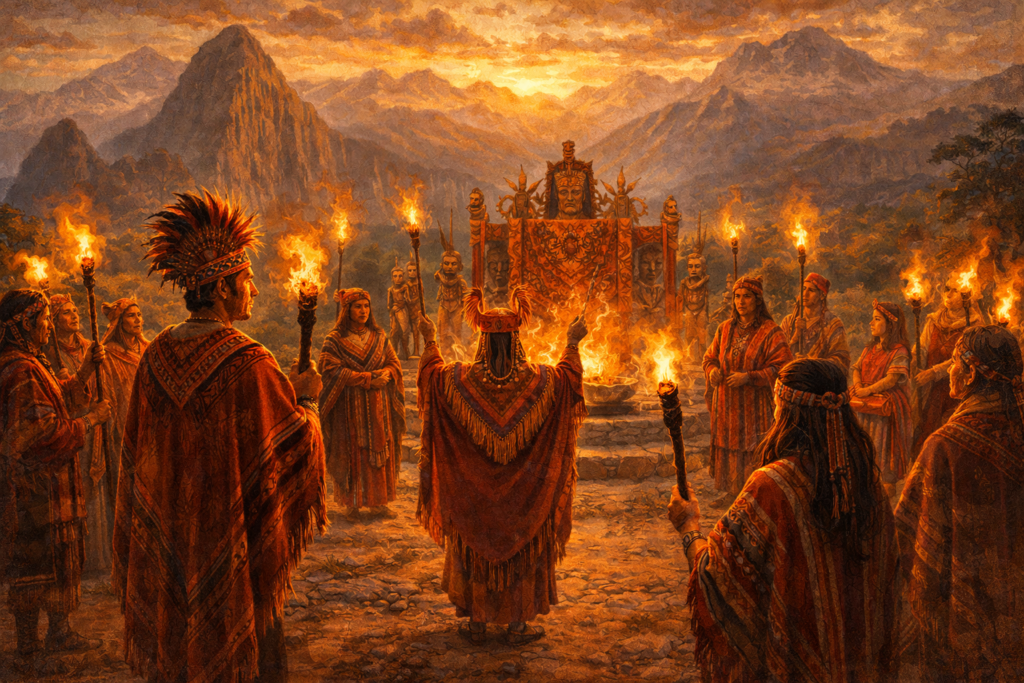
This isn’t Mexican Halloween. Día de los Muertos has roots in Aztec traditions that predate European contact by millennia. Families build altars with photos, favorite foods, and marigold flowers to welcome the spirits of deceased loved ones back for a visit.
Cemeteries come alive with music, food, and celebration. It’s not mourning — it’s a joyful reunion with those who’ve passed. UNESCO recognized it as Intangible Cultural Heritage, but for millions of Mexican families, it needs no official recognition. It’s simply what they do every November.
Ethiopian Coffee Ceremony — 1,000+ Years
Ethiopia is where coffee originated, and the traditional coffee ceremony remains a daily social ritual in homes across the country. Green beans are roasted over charcoal, ground by hand, and brewed in a clay pot called a jebena. The process takes over an hour.
Three rounds are served, each with its own significance. The ceremony isn’t about caffeine — it’s about community, conversation, and hospitality. Refusing an invitation to a coffee ceremony is considered deeply disrespectful. In a world of instant espresso, this slow ritual endures.
Aboriginal Dreamtime, Australia — 50,000+ Years
The oldest continuous cultural tradition on Earth. Aboriginal Australians have maintained their Dreamtime stories — creation narratives that explain the landscape, law, and life — through oral tradition for an estimated fifty thousand years.
These aren’t just stories. They’re navigation systems, legal codes, and ecological knowledge encoded in song and art. Specific songs describe exact travel routes across hundreds of miles. The tradition continues today, with elders passing Dreamtime knowledge to young people through ceremony, song, and painting.
Venetian Glassblowing, Italy — 1,000+ Years
The island of Murano has been the center of European glassblowing since the thirteenth century, when Venice relocated all its glassmakers there to protect trade secrets and reduce fire risk. Families have passed techniques down for thirty or more generations.
Today’s Murano artisans use the same tools, the same furnaces, and many of the same techniques as their medieval predecessors. The glass is still blown by mouth, shaped by hand, and colored with mineral compounds discovered centuries ago. Mass production hasn’t replaced the craft — it exists alongside it.
Mongolian Eagle Hunting — 4,000+ Years
In the mountains of western Mongolia and Kazakhstan, the Berkutchi still hunt with golden eagles exactly as their ancestors did four thousand years ago. Young hunters bond with eagles captured as chicks, training them over years to hunt foxes and hares on the frozen steppe.
The annual Golden Eagle Festival draws hunters from across the region to compete in calling, hunting, and horsemanship. The bond between hunter and eagle is deep — they live, travel, and sleep together for years. When the eagle is ready to breed, the hunter releases it back to the wild.
Japanese Onsen Bathing — 3,000+ Years
Public hot spring bathing in Japan follows rituals and etiquette that have remained essentially unchanged for millennia. The careful washing before entering the pool, the silence, the nakedness, the specific temperature preferences — all follow customs documented in Japan’s earliest writings.
Onsens remain central to Japanese social life. Business deals are made, friendships are deepened, and stress is dissolved in the same mineral waters that have served the same purpose for three thousand years. In a country famous for technology, this ancient analog practice shows no sign of fading.
Frequently Asked Questions
Can tourists participate in any of these traditions?
Several are accessible. Ethiopian coffee ceremonies welcome guests. Japanese onsens are open to visitors who follow etiquette. The Golden Eagle Festival in Mongolia accepts international attendees. Día de los Muertos celebrations in Oaxaca welcome respectful observers.
Which tradition is the oldest?
Aboriginal Dreamtime at an estimated fifty thousand years is by far the oldest continuous cultural tradition documented on Earth.
Are any of these traditions at risk of disappearing?
Mongolian eagle hunting has the smallest number of active practitioners and faces pressure from modernization. Japanese onsen culture is declining among younger generations. Most others remain strong within their communities.
How do these traditions survive in the modern world?
Through deliberate transmission — elders teaching young people — and through cultural pride. Communities that value their traditions actively invest in keeping them alive through education, festivals, and integration into daily life.
Are there similar ancient traditions in other parts of the world?
Hundreds. Every continent has living traditions with deep roots. Flamenco in Spain, throat singing in Tuva, Maasai jumping ceremonies in Kenya, and Navajo sand painting in the American Southwest are just a few examples.
Recap
Eight ancient traditions still practiced today: sumo wrestling’s Shinto rituals, the Maori haka, Mexico’s Día de los Muertos, Ethiopia’s coffee ceremony, Aboriginal Dreamtime stretching back fifty millennia, Murano’s glassblowing, Mongolian eagle hunting, and Japanese onsen bathing.
Conclusion
In a world that changes faster every year, these traditions are anchors. They remind us that some things are worth preserving exactly as they are — not as museum exhibits, but as living practices that give communities identity, purpose, and connection to something larger than the present moment.
The people who maintain these traditions aren’t resisting modernity. They’re choosing to carry something forward that they believe is too valuable to lose. And every year they succeed is another year that human heritage remains richer.
The most surprising thing about ancient traditions isn’t that they existed. It’s that they’re still here — practiced by real people, in real places, right now.