
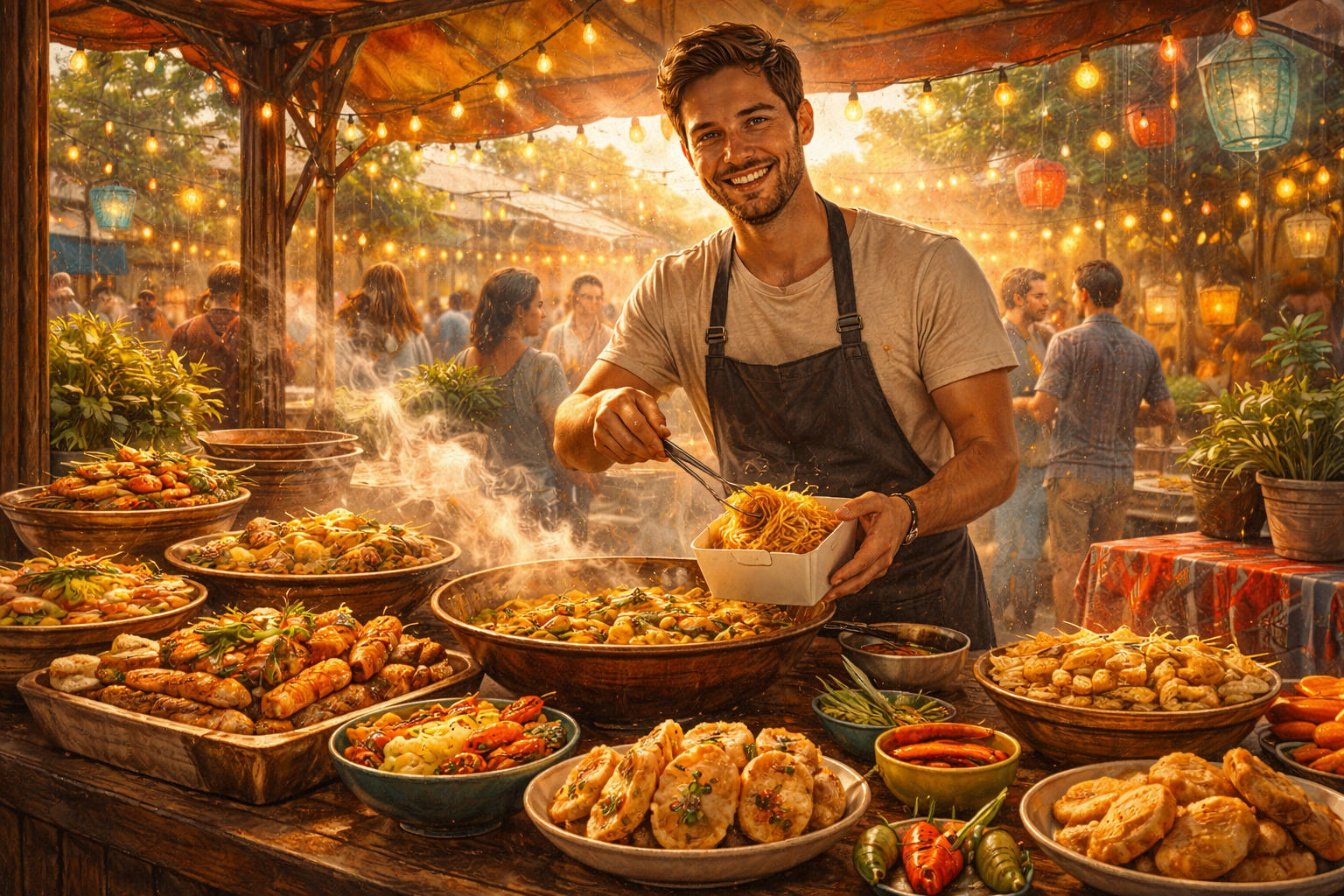
The best food in any country is rarely found in restaurants. It’s on the streets — in carts, stalls, and tiny windows where one person has been making the same dish for decades. Street food is where authenticity lives and where five dollars buys a meal that no fine dining experience can match.
These ten street foods are legendary in their home countries and worth traveling for. Each one tells the story of a culture through flavor.
Tacos al Pastor, Mexico City
Pork marinated in dried chilies and pineapple, stacked on a vertical spit and carved to order into warm corn tortillas. The combination of smoky, sweet, and spicy is so perfectly balanced it ruins every other taco you’ll ever eat.
Al pastor has Lebanese origins — immigrants brought the shawarma technique to Mexico, and Mexicans made it theirs with chilies and pineapple. The best stands have a line and a spit that’s been spinning since dawn.
Pad Thai, Bangkok
Sweet, sour, salty, and umami in one plate. Rice noodles stir-fried in a screaming hot wok with shrimp, egg, tofu, bean sprouts, and a tamarind sauce that hits every taste receptor simultaneously.
Bangkok’s street pad thai costs about a dollar and takes ninety seconds to prepare. The wok skills of veteran vendors are mesmerizing — fire, tossing, and plating happen in one fluid motion that looks more like performance than cooking.
Jerk Chicken, Jamaica
Chicken marinated in scotch bonnet peppers, allspice, thyme, and garlic, then slow-smoked over pimento wood in oil drum grills on the roadside. The heat is intense, the smoke is fragrant, and the flavor is deep and complex.
The jerk pits of Boston Bay in Portland Parish are considered ground zero for this dish. Vendors have been smoking chicken over the same pits for generations. The combination of heat and smoke creates a flavor that can’t be replicated in a kitchen.
Banh Mi, Ho Chi Minh City
French colonialism left Vietnam with baguettes. The Vietnamese filled them with pork, pate, pickled carrots, cilantro, and chili, creating a sandwich that’s greater than the sum of its parts.
The contrast of textures — crunchy bread, creamy pate, crisp vegetables, tender meat — and the balance of flavors make banh mi one of the most satisfying street foods on Earth. A perfect one costs under a dollar in Saigon.
Empanadas, Buenos Aires
Baked or fried dough pockets stuffed with seasoned beef, onions, olives, and hard-boiled egg. Every Argentine province has its own style — Tucuman’s are small and fried, Salta’s are larger and baked, and Buenos Aires offers every variation imaginable.
The best empanadas come from small shops where the dough is made that morning and the filling follows a family recipe. At about fifty cents each, buying a dozen different flavors and comparing is practically mandatory.
Falafel, Amman
Fried chickpea balls served in warm pita with tahini, pickled turnips, and fresh vegetables. Falafel in Jordan is a completely different experience from the westernized versions — crunchier, more herbaceous, and served with a speed and casualness that proves it’s everyday food, not exotic cuisine.
The best falafel stands in Amman serve nothing else. That singular focus means the recipe has been perfected over decades. The balls are fried to order in enormous vats of oil, and the pita is always warm.
Arepas, Bogota
Thick corn cakes griddled until crispy outside and soft inside, then split open and filled with anything from shredded chicken to black beans to avocado and cheese. Arepas are to Colombia what bread is to France — the foundation of every meal.
Every street corner in Bogota has an arepa vendor, and each one has slightly different fillings and techniques. The best arepas have a charred, smoky exterior that contrasts perfectly with the creamy filling inside.
Currywurst, Berlin
A sliced bratwurst covered in curry-flavored ketchup and dusted with curry powder. It sounds simple because it is. But somehow the combination of smoky sausage, sweet-tangy sauce, and warm spice is absurdly addictive.
Berlin takes currywurst seriously. There’s a museum dedicated to it. Stands compete fiercely for the best recipe. And Germans consume eight hundred million currywursts per year. It’s the ultimate proof that great street food doesn’t need to be complicated.
Som Tam, Bangkok
Green papaya salad pounded to order in a clay mortar. Shredded papaya, tomatoes, green beans, peanuts, dried shrimp, lime, fish sauce, chili, and palm sugar — balanced, bright, and explosively flavorful.
Watching a som tam vendor work is hypnotic. The rhythmic pounding of the mortar, the precise additions of each ingredient, the taste-test-and-adjust process — it’s artisanal cooking at street food speed and price.
Pani Puri, Mumbai
Crispy hollow shells filled with spiced potato, chickpeas, and a tangy mint water that explodes in your mouth when you bite in. Pani puri is eaten in one bite — the combination of crunch, spice, tang, and cool water hitting your palate all at once is unlike anything else.
Street vendors serve them one at a time, watching you eat each one before preparing the next. The pace is part of the experience — there’s a rhythm to eating pani puri that turns a snack into a social event.
Frequently Asked Questions
Is street food safe to eat?
In most countries, yes — if you follow basic rules. Eat where locals eat, choose stalls with high turnover, and watch for cleanliness. Freshly cooked food served hot is generally safe anywhere.
Which street food is best for picky eaters?
Empanadas and arepas are the safest bets. They’re mild, familiar in concept, and customizable. Currywurst is also accessible for Western palates.
Where is street food cheapest?
Southeast Asia and India offer the lowest prices. A full street food meal in Bangkok or Mumbai rarely exceeds two dollars.
Can I find vegetarian street food easily?
India is the best destination for vegetarian street food. Falafel is naturally vegetarian. Som tam can be made without shrimp. Arepas with beans and cheese are meat-free.
Which country has the best street food overall?
Thailand, Mexico, and India consistently top global street food rankings. Each offers incredible variety, rock-bottom prices, and flavors that are impossible to replicate elsewhere.
Recap
Ten legendary street foods from around the globe: Mexico’s tacos al pastor, Bangkok’s pad thai and som tam, Jamaica’s jerk chicken, Vietnam’s banh mi, Buenos Aires’ empanadas, Jordan’s falafel, Bogota’s arepas, Berlin’s currywurst, and Mumbai’s pani puri.
Conclusion
Street food is the most honest expression of a culture’s relationship with flavor. There’s no pretension, no plating, no markup. Just a person, a recipe perfected over time, and the simple joy of good food served fast.
Every destination on this list is worth visiting for the food alone. And the beauty of street food travel is that it’s inherently affordable — you can eat like royalty on a backpacker’s budget.
Next trip you take, skip the restaurant reviews. Find the street stall with the longest line of locals. Stand in it. Order whatever everyone else is ordering. That’s where the real food is.