
Living in a small space doesn’t mean living in a cramped one. The difference between a room that feels like a closet and one that feels open and airy often comes down to a few simple tricks that cost almost nothing.
Interior designers have used these techniques for decades. They’re not complicated. They don’t require renovation. And most of them can be done in a single afternoon.
Mirrors: Instant Square Footage
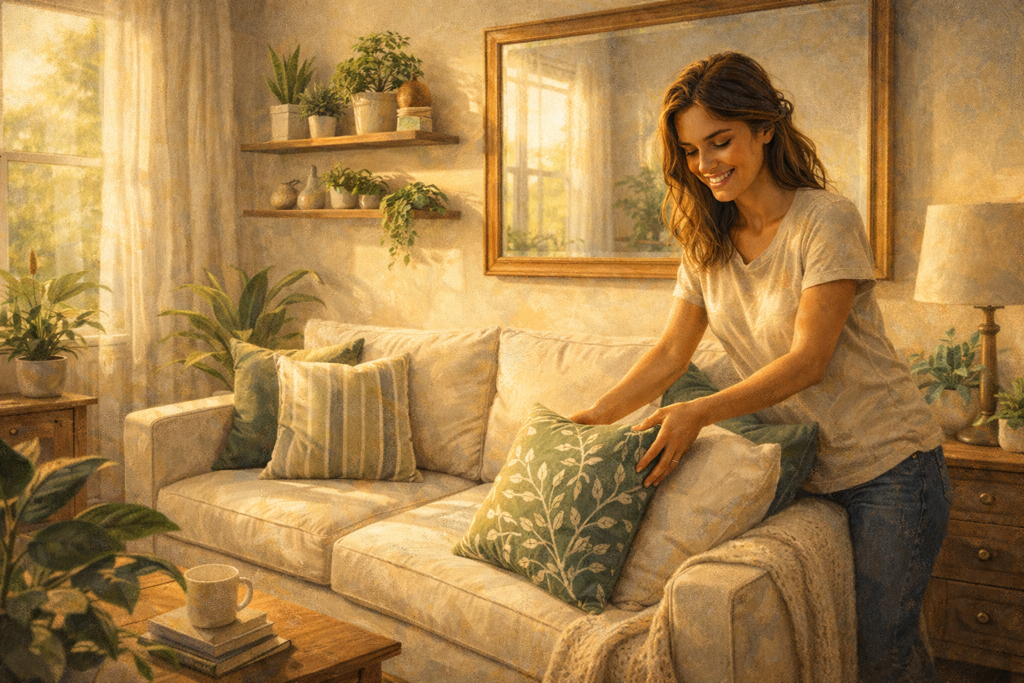
A large mirror on a wall doubles the visual depth of any room. Place it opposite a window and it reflects natural light and the view outside, creating the illusion of a second window.
Floor-to-ceiling mirrors have the strongest effect. But even a medium-sized mirror strategically placed above a console table or sofa makes a noticeable difference. The key is size — small decorative mirrors don’t do much. Go big.
Paint the Walls Light
Dark walls absorb light and make walls feel like they’re closing in. Light colors — white, cream, soft gray, pale blue — reflect light and push walls visually outward.
One consistent color throughout a small space eliminates visual boundaries between areas. When the eye doesn’t hit color changes, the brain perceives one continuous larger space instead of multiple tiny ones.
Curtains: Hang Them High and Wide
Hanging curtains right at the ceiling instead of just above the window frame tricks the eye into thinking the window — and the wall — is taller than it actually is.
Extend the curtain rod six to twelve inches beyond each side of the window. This makes the window appear wider and lets more light in when curtains are open. Light, flowing fabric adds to the airy feeling.
Furniture Off the Floor
Sofas, tables, and storage units on legs expose floor space underneath, making the room feel less heavy. When you can see the floor continuing under furniture, the brain registers more open area.
Floating shelves instead of bookcases. Wall-mounted nightstands instead of bedside tables. A glass coffee table instead of a solid wood one. Each swap reveals more floor and more visual breathing room.
The Power of Vertical Lines
Tall, narrow furniture draws the eye upward and emphasizes ceiling height. A tall thin bookshelf makes a room feel taller. Low, wide furniture does the opposite — it makes ceilings feel lower.
Vertical stripes on walls, tall plants, and floor-to-ceiling bookshelves all exploit this principle. When the eye travels up instead of across, the room expands in the dimension that matters most in small spaces.
Declutter Ruthlessly
No design trick compensates for too much stuff. Every surface covered with objects makes a room feel smaller, busier, and more stressful. Clear surfaces create visual calm that reads as spaciousness.
The 50% rule works well: only half of any shelf, table, or counter should hold objects. The other half stays empty. That breathing room is what separates a styled room from a cluttered one.
Lighting in Layers
A single overhead light flattens a room and creates harsh shadows in corners. Multiple light sources at different heights — floor lamp, table lamp, LED strips under shelves — eliminate dark spots and create depth.
Warm light makes spaces feel inviting. Cool light makes them feel sterile. Bulbs around 2700K to 3000K hit the sweet spot for living spaces.
Scale Your Furniture Down
Oversized furniture is the number one mistake in small rooms. A massive sectional sofa might be comfortable, but it swallows the room. Furniture should be proportional to the space — slightly smaller than what feels natural.
One statement piece is fine. But everything else should be slim, light, and modestly scaled. A loveseat instead of a sofa. A round bistro table instead of a rectangular dining table. Each inch saved multiplies across the room.
Use Hidden Storage
Visible storage — open shelves full of stuff, boxes stacked in corners — adds visual noise that makes rooms feel smaller. Hidden storage does the opposite.
Ottomans with internal storage. Beds with drawers underneath. Coffee tables with hidden compartments. The more you can tuck away behind doors and inside furniture, the cleaner and larger the room feels.
Choose One Focal Point
A room that tries to draw attention everywhere ends up feeling chaotic and small. One deliberate focal point — a gallery wall, a statement chair, a bold rug — gives the eye somewhere to land and makes everything else recede.
The focal point should be the first thing you see when entering the room. Everything else supports it without competing. This hierarchy creates visual order that the brain interprets as spaciousness.
Frequently Asked Questions
What’s the single most impactful change?
Mirrors and light wall colors tied for first. Together, they can transform a room’s feeling overnight for under fifty dollars.
Do these tricks work in rental apartments?
Every single one. None require permanent changes. Mirrors, curtains, lighting, and furniture choices are all renter-friendly.
Should I avoid dark colors completely?
Not completely. A single dark accent wall can add depth when the other three walls are light. The contrast actually enhances the sense of space.
How do I make a small bedroom feel bigger?
Bed on legs, light bedding, mirrors on closet doors, curtains hung at ceiling height, and nightstands mounted on the wall instead of standing on the floor.
Does natural light matter that much?
Enormously. Natural light is the most powerful tool for making spaces feel open. Never block windows with furniture or heavy curtains.
Recap
Ten proven techniques for making small rooms feel larger: strategic mirror placement, light wall colors, high-and-wide curtains, furniture on legs, vertical emphasis, ruthless decluttering, layered lighting, properly scaled furniture, hidden storage, and a single focal point.
Conclusion
A room’s feeling of size is more about perception than measurement. Two rooms with identical square footage can feel completely different depending on how they’re arranged, lit, and decorated.
These ten changes work because they manipulate how your brain processes space. More light, fewer visual obstacles, and clear sight lines tell your brain the room is bigger than the tape measure says.
Start with whichever change is easiest in your space. Each one builds on the others, and the cumulative effect is dramatic. A room that felt cramped last week can feel surprisingly spacious by next weekend.